Your Class Deserves a Mic Drop: Easy Ways to End Each Day Strong
Turn your chaotic last five minutes into a powerful engagement tool! Discover easy, hilarious exit routines that boost learning, reflection, and community—no extra prep required.

The End of Class Is a Wasted Goldmine
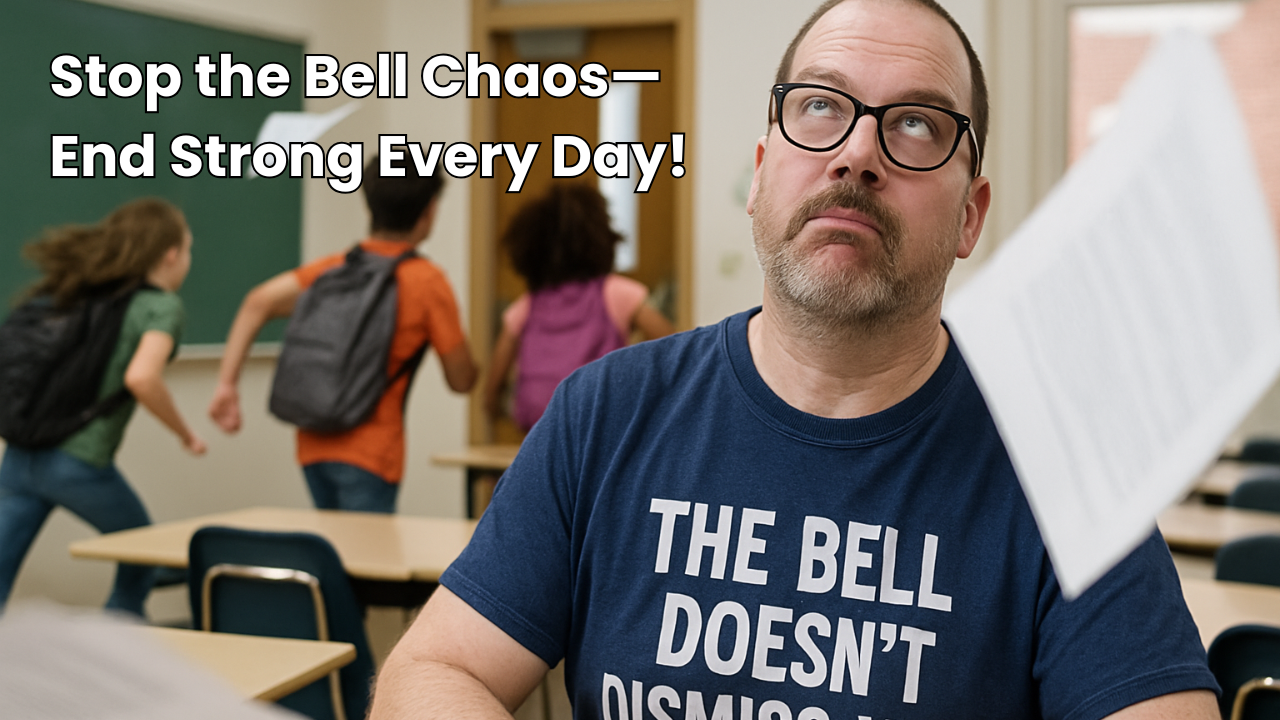
We’ve all been there. The bell rings, kids bolt, and you’re left shouting reminders into the void like a ghost in a haunted classroom. Backpacks slam, desks screech, and someone’s already halfway to the vending machine before you even finish your sentence. The end of class feels less like a grand finale and more like a fire drill with snacks.
But what if the last five minutes were actually your secret weapon for engagement? What if instead of chaos, you could wrap up each day with energy, reflection, and even a little joy? Spoiler alert: you can. And it’s not as hard as you think.
Let’s talk about how to build easy, engaging exit routines that make your students want to stay just five more minutes—and not because they forgot their phone charger.
Why the Last Five Minutes Matter More Than You Think
Cognitive science gives us this gem: the brain remembers beginnings and endings more vividly than the middle. It’s called the primacy-recency effect—and it’s why students might remember your goofy warm-up but not the brilliant grammar moment you nailed at minute 27.
If the class ends in noise and confusion, that’s what sticks. But if you end strong—focused, fun, and reflective—you reinforce learning, improve behavior, and set the tone for tomorrow. It’s basically classroom compound interest. Small daily deposits that build big engagement returns.
And no, you don’t need fancy tech or a Pinterest-worthy bulletin board. You just need a few high-impact, low-stress strategies that make closure part of your classroom culture.
1. The Bell Doesn’t Dismiss You—The Routine Does
Every teacher knows the “packing up at 3:54 when the bell rings at 3:58” struggle. Students have this sixth sense for when time’s almost up—and suddenly you’re teaching into a tornado of zipping backpacks.
The fix? Train them to respond to a routine, not a ringtone.
Try a daily “Exit Fiesta.” At the last three minutes, play a signature song (bonus points for something wildly dramatic—think Eye of the Tiger). Everyone stops, breathes, and participates in a 30-second recap. A student “Closure Captain” does the quick wrap-up, another reads the class quote of the day, and someone else gives a 10-second shout-out to a classmate who “crushed it.”
You’ve instantly transformed chaos into ritual.
And here’s the kicker—students start reminding each other when it’s “Fiesta Time.” You get structure. They get ownership. And nobody’s running out the door before you even finish your sentence.
2. Reflection Without the Snooze Factor
Let’s be honest—traditional exit tickets feel like filling out a DMV form. Students rush, scribble something vaguely related to your lesson (“I learned... Spanish”), and vanish.
Let’s shake that up.
Start with Emoji Exit Tickets. Instead of writing paragraphs, students draw or choose an emoji to represent how they felt about the day’s lesson. You can turn it into a quick talk: “Why the crying face, Mateo?” Suddenly, reflection turns into conversation instead of paperwork.
Or try the Daily Yelp Review:
“Rate today’s class out of five stars. Include a dramatic one-line review.”
You’ll get gems like: “Too much grammar, not enough tacos.” Perfect feedback.
If you’re feeling bold, make it digital with a “Tweet the Day” board—students summarize the day’s takeaway in 140 characters or less (bonus if it’s in the target language). It’s fun, fast, and gives you instant insight into what stuck.
Because when reflection is creative, it stops being a chore and becomes a memory.
3. Gamify the Goodbye
Engagement and games go together like teachers and caffeine. So, why not use play to end your class on a high note?
Introduce Trashketball Exit Questions—students must correctly answer a question about the day’s lesson before taking a shot at the trash can. It’s review, closure, and chaos control in one tidy package.
Or create a Spin-the-Exit Wheel (digital or paper). On it, include random tasks: “Summarize today in a meme,” “Give your best telenovela recap,” “Say the day’s verb in five voices.” It keeps everyone laughing and focused while reinforcing learning.
You can even hide a Mystery Word somewhere in your lesson. Whoever finds and explains it correctly earns a sticker, a silly hat, or the title “Supreme Señor(a) of Spanish” for the day. Gamification doesn’t just keep energy high—it tricks the brain into reviewing without the pain of “studying.”
4. Student-Led Wrap-Up Crews
When students own the ending, engagement soars. Assign a rotating Wrap-Up Crew: one “Host,” one “Summarizer,” one “Timer,” and one “Hype Person.”
They handle the last three minutes of class—recapping key ideas, calling out great participation, maybe even announcing “The Word of the Day.” Give them freedom to add flair. I once had a student end every class with, “This episode of Spanish Survivors has been brought to you by conjugations.” Ten out of ten. No notes.
This approach builds leadership, listening skills, and community. Plus, it saves your voice and turns those wild final minutes into structured fun. When the kids take charge, it feels less like herding cats and more like producing a talk show.
And yes, let them actually say, “You are dismissed.” You’ve never seen middle schoolers take something more seriously.
5. Connection Over Control
Sometimes the most powerful exit routine has nothing to do with grammar or vocabulary—it’s about people.
Ask one meaningful (but hilarious) question at the end of each class:
“Who made you laugh today?”
“What was the weirdest word we said?”
“If this class were a movie, what would today’s title be?”
You’ll be amazed at the responses. Suddenly, even your quietest students have something to share. And the tone of your classroom shifts from “content delivery system” to “community.”
A moment of humor, gratitude, or human connection can make a bigger impact than any worksheet. These are the emotional anchors that keep students coming back mentally tomorrow.
Why This Works (and Why It’s Worth It)
When you create closure, you build habits. Students know what to expect. Their brains feel safe and satisfied, and that stability opens the door for more engagement during your lessons.
You also give yourself a natural checkpoint—space to breathe, reset, and gauge how things are landing. Those last minutes stop feeling wasted and start fueling your next lesson.
And honestly? You deserve to end your class smiling, not shouting.
Action Step: Try One Tomorrow
Start small. Pick one strategy from above and test it tomorrow. Announce it with mock drama:
“Ladies and gentlemen, prepare yourselves for Exit Fiesta 2.0!”
Your students will laugh. You’ll laugh. And you’ll realize how easy it is to shift your classroom energy from survival mode to celebration mode.
Because engagement doesn’t stop when the bell rings—it ends when the learning sticks.
Ready to Level Up?
If you love strategies that make your class flow naturally and keep kids hooked from start to finish, you’ll love diving deeper into Comprehension-Based Instruction through the Assessment Academy course at https://imim.us/academy. It’s packed with real-world examples, done-for-you rubrics, and easy wins that make your CI classroom smoother than ever.
And if you’re curious how strong your current CI practices really are, take the CI Proficiency Quiz at https://imim.us/ciquiz. It’s quick, free, and way more fun than grading 120 quizzes.
Key Takeaways
- Structure beats chaos: predictable exit routines calm the end-of-class storm.
- Reflection doesn’t have to be boring—add humor, emojis, or ratings.
- Gamify the goodbye to make closure memorable and meaningful.
- Let students lead; they’ll surprise you with creativity and ownership.
- End with connection, not control—because laughter sticks longer than lectures.