Why Relationships Fix 80% of Behavior Problems—No Detention Required
Discover why relationships fix 80% of classroom behavior problems. Build trust, laugh more, and manage less with these easy CI strategies for happier, more connected classes.

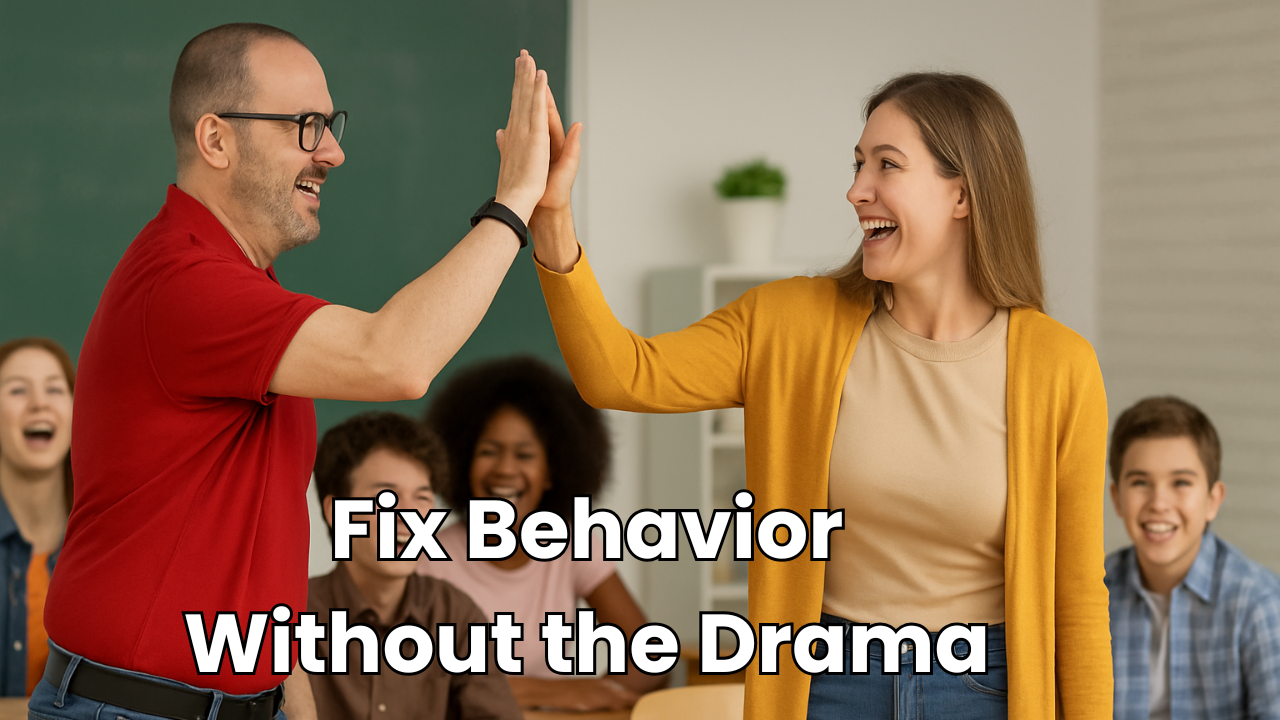
The Real Secret to Classroom Management (That Nobody Puts on a PD Slide)
Here’s the truth every teacher learns after about three weeks in the trenches: you can’t out-discipline disconnection.
You can have the world’s most airtight seating chart, a consequence ladder worthy of NASA, and a “teacher glare” that could curdle milk — but if your students don’t feel seen, you’re just managing bodies, not minds.
And here’s the kicker: in a Comprehension-Based Classroom, relationships aren’t just helpful — they’re non-negotiable. CI teaching depends on trust. Without it, your students won’t risk speaking, listening, or even pretending to care about your interpretive input.
But the good news? Relationship-building isn’t another thing to do. It’s the thing that makes everything else easier. You fix behavior, build buy-in, and make your job at least 80% more fun.
The Myth of the “Tough Teacher”
We’ve all had that colleague who proudly declares, “I run a tight ship. I don’t smile until October.”
Good for them. I, personally, would rather not run a ship full of silent resentment and smuggled cell phones.
Here’s the problem with “tough teacher” energy: it assumes respect can be demanded. It can’t. In a CI classroom, respect is earned through connection, not control. Students need to feel psychologically safe before they’ll risk sounding ridiculous saying me gusta el gato verde.
Relationships give you classroom authority without having to raise your voice or your blood pressure.
Think of it like this: connection is the remote control. Without it, your input doesn’t reach the receiver.
Step 1: The Power of the “Minute of Humanity”
Before you dive into high-frequency verbs or brain breaks, take sixty seconds to be human. Greet every student. Ask a random question. Share something dumb that happened to you (“I spilled my coffee while grading. Again. It’s my cardio now.”).
That single minute signals something powerful: You matter more than the content.
In return, your students’ defenses drop. The ones who walk in ready to fight the system start fighting less. They can’t argue with someone who actually sees them.
Teachers often worry that this takes too much time. But ironically, those sixty seconds save you ten minutes of chaos later. You either invest in connection upfront or pay for disconnection all class long.
Step 2: Humor Is the New Detention
In CI teaching, humor isn’t optional — it’s oxygen.
When students laugh, they process input more deeply, retain it longer, and associate the class with safety instead of survival. Laughter literally changes the chemistry in the room.
And the best part? You don’t have to be funny. You just have to be real.
Use running jokes that become part of your classroom lore. Maybe you have a stuffed llama named “Señor Drama.” Maybe your “no phones” bin is labeled “Phone Jail – Sentences May Vary.” Maybe your dramatic sigh becomes the universal signal for “Why are we like this?”
Humor softens correction, redirects energy, and makes you likable — which, by the way, is the most underrated classroom management skill in existence.
When your students like you, they self-regulate to protect the relationship. That’s when the magic happens.
Step 3: Validation Over Discipline
Here’s a dirty little secret: half of your “defiant” students aren’t being defiant. They’re just tired, anxious, or hungry.
Validating doesn’t mean excusing behavior. It means acknowledging humanity.
Instead of barking, “Sit down!” try, “I can tell today’s been rough. Sit for a sec and take a breather.”
That shift in tone can change everything. Suddenly, you’re not an authority figure to rebel against — you’re an ally.
In a CI classroom, validation keeps the affective filter low. The brain can’t acquire language in fight-or-flight mode. So when you meet students where they are emotionally, you unlock the door to learning again.
And yes — keep emergency granola bars. Hunger management is classroom management.
Step 4: Consistency > Consequences
You can’t build trust if your rules change with your mood. Consistency says, “You’re safe here.”
Establish predictable routines: same greeting, same start, same closure. That stability lets students relax into learning.
If you mess up (and you will), own it. Say, “Yesterday was rough, and I could’ve handled it better.” Watch their jaws drop. That humility buys you more respect than any detention slip ever could.
And yes — you’ll need to hit reset sometimes. Hold a “Profe Reset Day.” Tell your students, “We need to talk about how this class is going. What’s working? What’s not?”
Invite feedback. Listen without getting defensive. The sheer novelty of an adult listening often shocks them into behaving like actual humans again.
Step 5: Connection Before Correction
Here’s the golden rule of relationship-based classroom management: connect first, correct later.
When a student acts out, resist the urge to respond in the moment. Pause. Breathe. Deal with it privately later. Nothing kills trust faster than public humiliation.
In private, lead with curiosity. “Hey, what’s up? That didn’t seem like you.” Nine times out of ten, you’ll uncover something deeper than attitude — stress, confusion, fear, or the simple fact that their Chromebook just erased their essay again.
When correction comes after connection, it feels like care, not punishment.
How Relationships Actually Improve CI Learning
Here’s where the science and the silliness meet.
Comprehension-based input relies on sustained attention and emotional safety. Students have to want to listen to you. They have to feel like the content is about them, for them, and delivered by someone who’s on their side.
When they trust you, they stop translating in their heads and start acquiring naturally. They’re willing to answer questions, take risks, and laugh through mistakes.
You’ll see fewer blurters, fewer shutdowns, and more authentic participation. And suddenly, the kids who used to make you want to cry are your biggest story actors.
Stories From the Trenches
Let’s talk real life.
I once had a student, let’s call him Miguel, whose main hobby was seeing how long he could avoid doing anything remotely academic. He didn’t hate Spanish — he just hated school.
Instead of going nuclear, I started asking him about his music. Turns out, he loved old-school hip-hop. So one day, we compared the rhythm of a Spanish rap verse to one of his favorite songs.
Boom. He was hooked.
A week later, he volunteered to read during story time. By the end of the semester, he was helping classmates translate lyrics. All it took was one point of connection — one human moment.
Behavior solved. Learning unlocked.
But What About the “Hard Kids”?
Every teacher has that one student who tests the limits of your patience, sanity, and caffeine supply. The “hard kid.”
Here’s what I’ve learned: the harder the kid, the more desperate the need for connection. They’ve built walls not because they don’t care, but because caring feels risky.
Your job isn’t to tear the wall down — it’s to find a door.
Sometimes the door is humor. Sometimes it’s respect. Sometimes it’s a dumb inside joke about how they can’t remember the word zapato for the third time this month.
Over time, small gestures build trust. And once trust forms, behavior changes naturally.
The 80% Rule
No, it’s not scientific. It’s survival-tested.
If you can solve 80% of your classroom behavior issues through relationships, that last 20% — the truly wild moments — won’t break you. You’ll have the trust banked to handle it.
Relationships make the class self-correcting. Students start holding each other accountable because they care about the group dynamic.
When your classroom becomes a community, management shifts from you vs. them to us together.
And that’s when CI teaching gets fun again.
If You Want to Go Deeper
Want to assess your current CI superpowers and see how strong your relationship-based teaching really is? Take the CI Proficiency Quiz. It’s free, fast, and freakishly accurate.
And if you want plug-and-play lessons that already build relationships into every activity, grab the CI Survival Kit. You’ll get ready-to-go stories, slides, and assessments in Spanish, French, and German — all designed to help you connect, not just correct.
Because teaching shouldn’t feel like surviving a zombie apocalypse. It should feel like laughing your way through it with people you like.
Key Takeaways
- Relationships solve 80% of behavior problems before they start.
- Humor, validation, and consistency build trust faster than punishment.
- Emotional safety is the foundation of every CI classroom.
- Connection isn’t “extra”—it is classroom management.
- When they like you, they’ll learn from you. It’s that simple.