These 3 Assessment Myths Are Wrecking Your CI Classroom
CI teachers: stop overcomplicating assessment. Learn the three biggest myths that waste time and discover simple, effective ways to assess comprehension without extra work.

Let’s be honest with each other in the way only CI teachers can be honest.
Assessment is not what’s burning you out.
The way you think about assessment is.
You did not move to Comprehensible Input because you love designing quizzes. You did not fall in love with storyasking, PQA, readings, and conversations because you secretly hoped to spend your evenings crafting “rigorous-looking” documents in Google Docs while reheating your coffee for the third time.
You switched to CI because you wanted language to feel human again. You wanted your classroom to feel alive. You wanted acquisition instead of memorization. You built a room full of stories, laughter, conversations, and genuine comprehension.
And then, somehow, assessment never got the memo.
You’re teaching like a CI rockstar all week long… and then assessing like it’s 1997.
That disconnect is where the stress lives.
Not in assessment itself, but in the myths you quietly absorbed about what assessment is supposed to look like. These myths feel logical. They feel responsible. They feel “teacher-y.”
They are also quietly stealing your time, your energy, and your confidence.
Once you see them, you can’t unsee them.
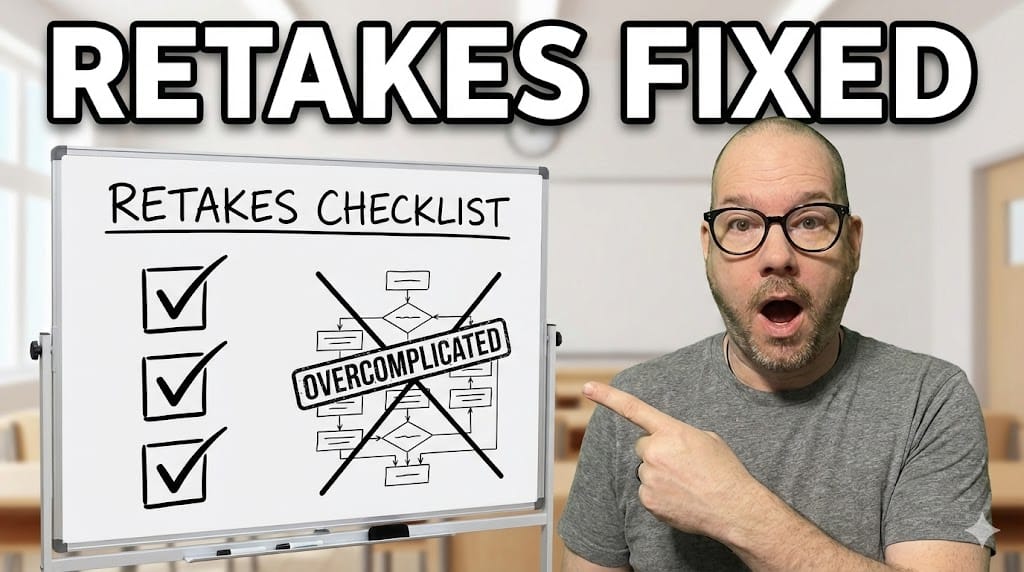
Myth 1 — Complicated Equals Rigorous
At some point in your career, you absorbed the idea that if an assessment is simple, it must not be rigorous. That belief sneaks into your planning in subtle ways. You make readings longer than they need to be. You make questions trickier than they need to be. You add formatting, structure, and directions that make the document look impressive but add very little to what you’re actually trying to measure.
Meanwhile, students sit down to take the assessment and immediately feel like they’ve stepped into a different class. They recognize none of the rhythm, none of the familiarity, none of the flow that they experienced all week. And when that happens, you’re no longer measuring their comprehension of language. You’re measuring how well they can navigate a confusing document.
Rigor in a CI classroom comes from comprehension, not complexity.
If students can understand a text and clearly demonstrate that understanding, you have rigor. That’s it. That’s the goal. The problem is we’ve been trained to associate “looking difficult” with “being rigorous,” and those are not the same thing.
When you simplify assessments, something surprising happens. Students perform better. They feel calmer. They recognize what they’re being asked to do. They can focus entirely on meaning instead of procedure.
Simple does not mean weak. Simple means aligned.
In practice, this means you can use the same five-question structure every single week. You can take yesterday’s story, paste it into a document, and add questions that ask about meaning. You can reuse the same rubric you’ve been using all year.
And the result is not a weaker assessment. It is a clearer one.
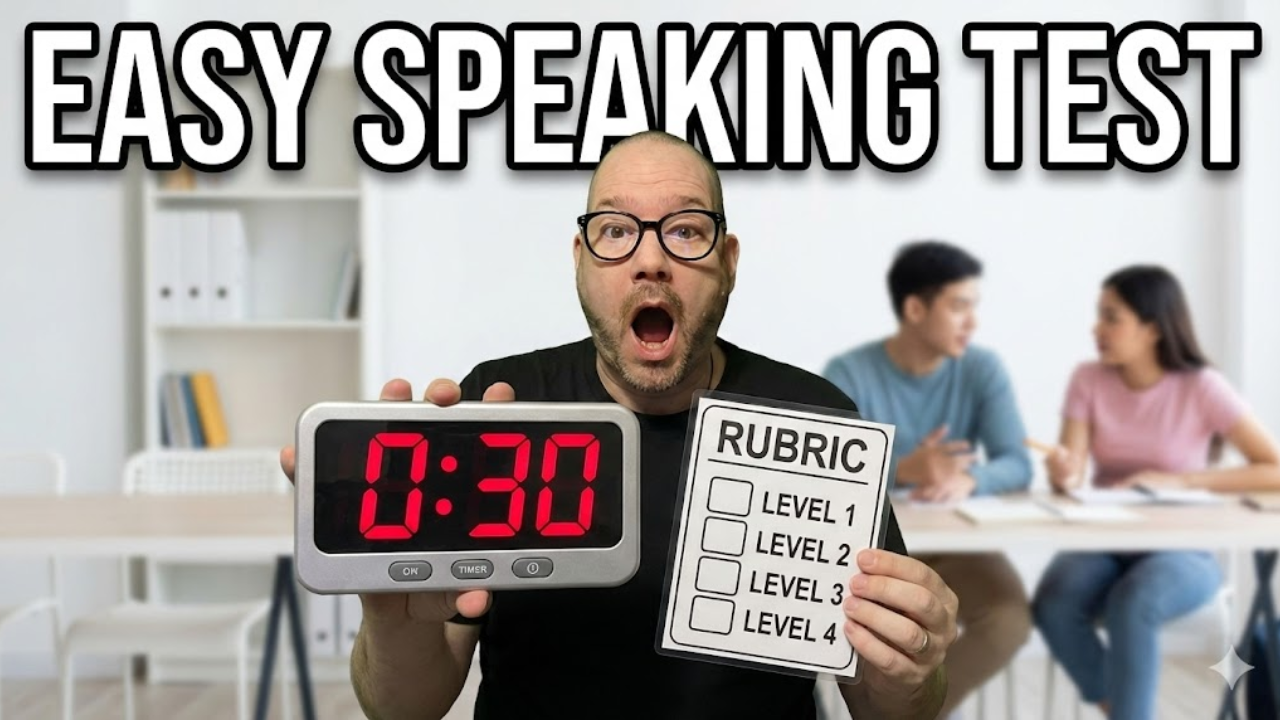
Myth 2 — Every Mode Needs Its Own Assessment Style
We were taught that interpretive, interpersonal, and presentational communication all require their own unique assessment formats. So teachers end up building three different kinds of tasks every week, each with its own directions, layout, and rubric.
This is exhausting.
You are essentially running a mini publishing house for no reason.
Here’s the shift that changes everything: you don’t need three different formats. You need one predictable structure that students recognize instantly.
Students read and respond. Students listen and respond. Students speak or write and respond.
The structure stays the same. Only the input changes.
When you use one layout and one rubric across modes, students stop wasting energy figuring out what they’re supposed to do. They already know. They’ve done this before. They can focus entirely on demonstrating comprehension and communication.
And you stop reinventing the wheel every week.
A helpful question to ask yourself is, “What did we already do this week that shows comprehension?” That question is far more powerful than, “What kind of assessment should I create?”
Myth 3 — Assessment Happens After Teaching
This is the sneakiest myth because it feels so logical.
You teach first. Then you assess.
But in a CI classroom, assessment material is created during teaching, not after it.
That story you told on Tuesday? That’s a perfectly leveled reading for your students. They know the characters, the problem, the details. It is the ideal interpretive text.
Those slides you used for PQA? They already have visuals and captions that make them readable.
That class retell where students corrected each other and filled in details? That’s a ready-made assessment text.
You are surrounded by assessment material all week long and don’t recognize it because it feels like “class,” not “assessment.”
When you start capturing what already happened, something incredible happens to your prep time. It collapses.
Assessment stops being invention and becomes documentation.
Save the story. Screenshot the slides. Type up the retell. You’re building an assessment bank without trying.
Myth 4 — Longer Means Better
There is a deeply ingrained belief that longer assessments show more learning. That a dense, lengthy reading proves something that a short one doesn’t.
But long assessments often measure stamina more than comprehension.
If it takes students more than two minutes to read the text, they are spending energy decoding length instead of demonstrating understanding.
Short, familiar texts are far more powerful because students can immediately access the meaning. They don’t have to fight through unfamiliar content to show what they know.
Short and familiar wins every time.
Students feel more successful. You grade faster. The data you get is cleaner and more accurate.
Myth 5 — Grading Must Be Detailed to Be Fair
Grading becomes overwhelming when you believe you have to analyze everything. Grammar, spelling, formatting, vocabulary choice, and partial credit debates quickly turn grading into a marathon.
But you are not grading essays. You are checking for comprehension and communication.
A simple scale is more than enough:
- 5 — Fully understood
- 4 — Mostly understood
- 3 — Somewhat understood
- 2 — Minimal understanding
- 1 — Not yet
You look for evidence of meaning. You recognize it. You move on.
Grading becomes recognition, not analysis.
What This Looks Like in Real Life
Imagine this week.
You tell a story on Monday. On Tuesday, you paste that story into your assessment template and add five comprehension questions. Wednesday’s assessment is ready.
On Thursday, you use slides for conversation. On Friday, you screenshot those slides and add captions. Next week’s assessment is ready.
Students retell the story out loud. You type it up. Another assessment is ready.
You didn’t create anything new. You captured what already happened.
The Real Shift
Assessment is not the enemy.
The myths you believed about assessment are.
When you simplify, align, and recycle what you already do, assessment becomes easy, fast, and effective. You get time back. Students feel successful. And you stop feeling like assessment is a second job layered on top of teaching.
You realize something incredibly freeing.
You were already doing the hard part.
Assessment was just waiting for you to stop overthinking it.
Key Takeaways
- Rigor comes from comprehension, not complexity
- One structure can work across all modes
- Assessment material is created during class every day
- Short, familiar texts reveal understanding best
- Simple grading systems save massive time