The Fastest Feedback Kids Actually Read (Yes, Even Those Kids)
Fast, simple feedback students actually read. Learn copy-paste strategies and sentence starters that save time, reduce burnout, and improve student understanding—without writing novels or grading all night.


ntroduction: Why Your Feedback Is Being Ignored (And It’s Not You)
Let’s just name the thing we’re all pretending not to see. You leave thoughtful, well-intentioned feedback. You type full sentences. You explain. You clarify. You even soften the tone so no one cries. And then… nothing happens. The same errors show up again. The same misunderstandings return like sequels no one asked for. And you start wondering whether students are reading your feedback at all, or if it’s being immediately yeeted into the void the moment grades post.
Here’s the good news: it’s not that students don’t care. It’s that most feedback is designed for teachers, not readers. It’s written the way we were trained to write feedback, not the way human beings with underdeveloped frontal lobes actually process information. Especially tired human beings. Especially teenagers. Especially teenagers who just want to know if they passed.
If you’re a CI teacher, this problem can feel even more frustrating. Your whole instructional approach is built around clarity, simplicity, and comprehension. But somehow, when it comes to feedback, we revert to paragraphs, rubrics with twelve rows, and comments that sound suspiciously like professional development slides. No wonder kids aren’t reading them. They barely read instructions.
This article is about the fastest way to give feedback kids actually read. Not skim. Not pretend to read. Actually read. And maybe even use. We’re talking copy-paste strategies, sentence starters, and systems that respect your time and your sanity. Nothing fancy. Nothing revolutionary. Just practical moves that work in real classrooms with real kids who are very tired and deeply allergic to extra words.
The Real Reason Students Ignore Feedback
Before we fix feedback, we have to diagnose the problem honestly. Students ignore feedback for three main reasons, and none of them are personal. First, it’s too long. Second, it’s too vague. Third, it doesn’t tell them what to do next. When all three show up at once, your feedback doesn’t just get ignored. It becomes invisible.
Length is the biggest offender. Long feedback feels like work, and students have been trained by years of school to avoid work whenever possible. If a comment takes more than five seconds to visually process, many students won’t even start. This doesn’t make them bad people. It makes them efficient.
Vagueness is a close second. Comments like “be more specific,” “add detail,” or “watch your accuracy” sound helpful to adults, but they don’t translate into action for students. They don’t know what counts as “more.” They don’t know which detail matters. They don’t know what accuracy you’re talking about. So they nod internally and move on.
And finally, feedback often lacks a clear next step. It explains what went wrong without telling students how to fix it. That’s like pointing out someone is lost without giving directions. Eventually, they stop asking for directions.
The goal of fast, readable feedback is not to say everything. It’s to say the right thing, in the smallest possible package, at the right moment.
Why CI Teachers Are Perfectly Positioned to Fix This
If you teach with comprehensible input, you already believe in making things understandable, predictable, and low-stress. You already know that clarity beats complexity every time. You already know that flooding students with language doesn’t help them acquire more of it. And yet, many CI teachers still give feedback that contradicts everything they know about how learning works.
The shift here is not philosophical. It’s practical. Feedback should follow the same rules as input. It should be comprehensible, focused, and limited. It should highlight meaning over minutiae. And it should reduce cognitive load, not add to it.
When feedback aligns with CI principles, something interesting happens. Students don’t just read it. They start anticipating it. They recognize patterns. They understand what you’re looking for. And suddenly, feedback becomes part of the learning loop instead of a post-mortem.
The One-Skill Rule: Why Less Feedback Works Better
One of the fastest ways to make feedback readable is to limit it to one skill at a time. Not one paragraph. One skill. This is where many well-meaning teachers struggle, because we see everything. We see the grammar issue, the comprehension gap, the missing detail, and the formatting problem all at once. Our brains want to fix it all.
Students’ brains do not.
When feedback focuses on one skill, students can actually process it. They know where to look. They know what to fix. And most importantly, they can experience success quickly. That success builds trust. Trust makes students more likely to read the next comment you leave.
This doesn’t mean you ignore other issues forever. It means you prioritize. Today, we’re focusing on meaning. Next time, maybe organization. Another time, clarity of response. The long game matters more than the perfect assignment.
Sentence Starters That Students Actually Understand
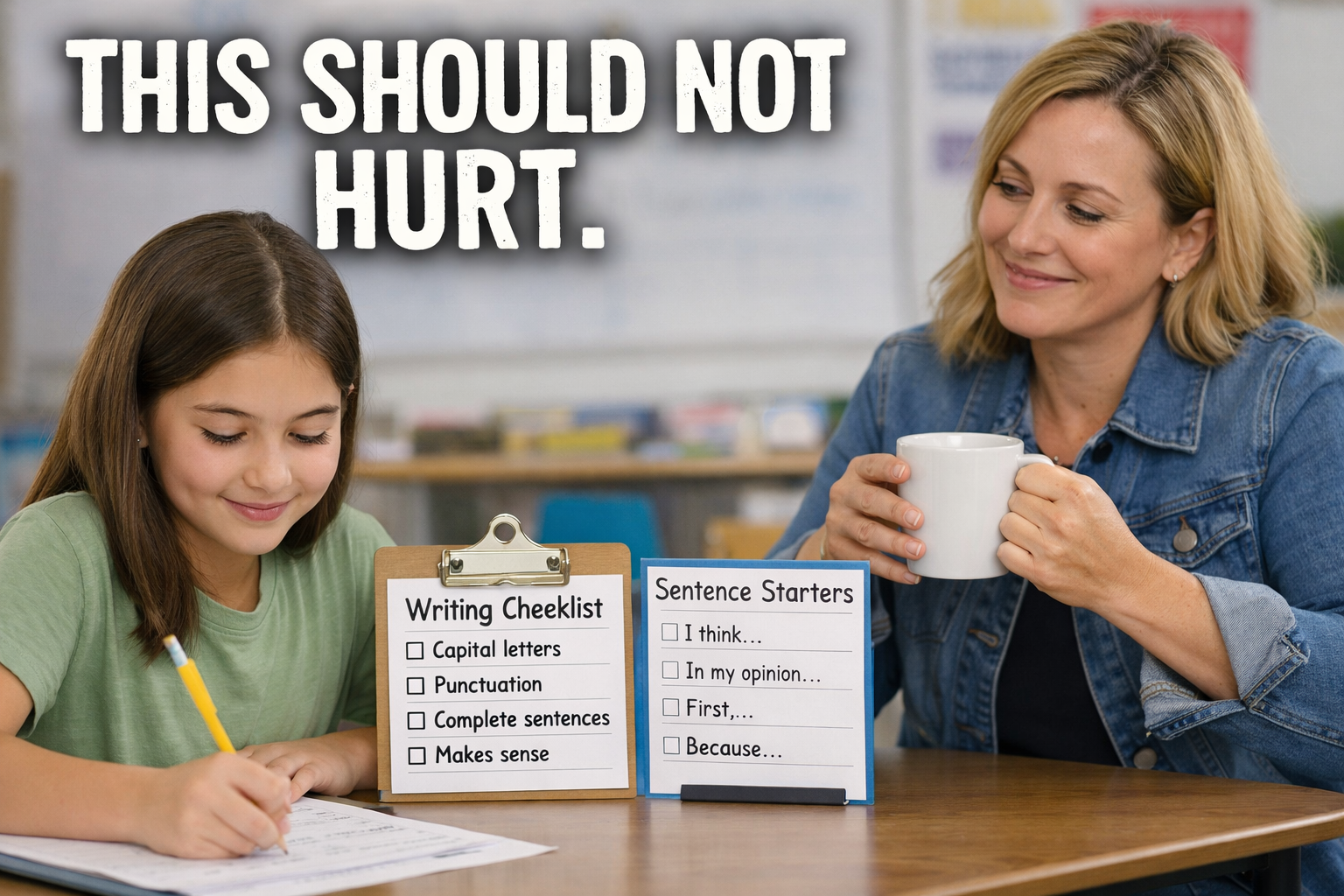
One of the simplest ways to speed up feedback and make it more readable is to use consistent sentence starters. These are short, repeatable phrases that signal what kind of feedback is coming. Over time, students learn to recognize them instantly, which reduces the mental energy required to decode your comments.
For example, starting feedback with “This shows you understand…” immediately frames the comment as positive and meaning-based. Starting with “To make this clearer…” signals a revision task without sounding punitive. Starting with “Next time, try…” focuses attention forward instead of backward.
The magic here is repetition. When students see the same sentence starters over and over, they stop reading every word and start reading for meaning. That’s not laziness. That’s fluency.
And yes, this also saves you time. Copy-paste is not cheating. It’s pedagogy.
Copy-Paste Feedback Is Not Soulless (It’s Strategic)
There is a persistent myth in education that personalized feedback must be unique every time. This myth is responsible for more teacher burnout than standardized testing ever was. The truth is, most student errors fall into predictable categories. That means your feedback can too.
Creating a feedback bank for your most common situations is one of the highest-leverage moves you can make. These comments are not generic. They’re reusable. There’s a difference. A reusable comment is still specific. It just applies to more than one student.
When you copy-paste feedback, you free up mental space to notice patterns, adjust instruction, and respond to students who truly need individualized support. And students don’t mind. They’re not comparing comments like Yelp reviews. They’re just trying to understand what you want from them.
Why Speed Makes Feedback More Effective
Fast feedback doesn’t just help you. It helps students. When feedback arrives quickly, students still remember the task. The context is fresh. The emotional investment is intact. When feedback comes two weeks later, it might as well be from another lifetime.
Speed also changes how you write. When you know you don’t have all night, you’re more likely to be concise. You focus on essentials. You skip the fluff. Ironically, time pressure often improves feedback quality.
Setting boundaries matters here. Decide in advance how much time you’re willing to spend. Use timers. Use shortcuts. Give yourself permission to stop. Done feedback that gets read beats perfect feedback that never gets used.
Making Feedback Actionable Without Writing a Novel
Actionable feedback answers one simple question: what should I do next? If your comment doesn’t answer that question, students are left guessing. And guessing is exhausting.
Actionable feedback uses clear verbs and specific directions. It avoids abstractions. It focuses on the next attempt, not the current failure. And it respects students’ ability to improve without overwhelming them.
The fastest way to make feedback actionable is to end with one directive. One. Not three. Not a paragraph of suggestions. One clear move. This transforms feedback from commentary into coaching.
Getting Students to Interact With Feedback
Reading feedback is step one. Using it is step two. If you want students to actually engage with feedback, you have to build that expectation into your routines. This doesn’t require elaborate systems or reflection essays that no one enjoys.
Simple moves work best. Asking students to respond to one comment. Giving them a minute in class to apply feedback. Having them highlight what they changed. These small actions signal that feedback matters.
When feedback becomes part of class culture, students stop seeing it as a judgment and start seeing it as information. That shift is everything.
How This Fits Into Proficiency-Based CI Assessment
For CI teachers using proficiency-based grading, fast, readable feedback is not optional. It’s essential. Proficiency descriptors mean nothing if students don’t understand how their work connects to them.
Feedback bridges that gap. It translates rubric language into human language. It shows students what progress looks like. And it keeps assessment aligned with acquisition instead of compliance.
If you’ve ever wondered whether your grading practices truly reflect your CI values, this is a great moment to pause and check in with yourself. The CI Proficiency Quiz at https://imim.us/ciquiz is a quick way to assess how aligned your practices really are. No judgment. Just clarity.
Tools That Make This Easier (Because You’re Busy)
None of this works if it adds hours to your week. That’s where systems matter. Having ready-to-go feedback language, clear assessment targets, and lessons designed with assessment in mind changes everything.
That’s why resources like the CI Survival Kit exist. When lessons, assessments, and feedback are built to work together, you spend less time inventing and more time teaching. If you want monthly CI lessons that already anticipate common errors and streamline feedback, check it out at https://imim.us/kit.
Conclusion: Feedback That Gets Read Is Feedback That Works
You don’t need to work harder to give better feedback. You need to work smaller. Shorter comments. Clearer language. Fewer targets. Faster turnaround. When feedback respects how students actually process information, it stops being ignored.
The goal is not perfection. The goal is communication. And when students read your feedback, understand it, and act on it, everybody wins. Even your Sunday.
Key Takeaways
- Short, focused feedback is more effective than detailed explanations.
- Consistent sentence starters help students recognize and understand feedback quickly.
- Copy-paste feedback saves time without sacrificing clarity or quality.
- Actionable feedback always includes one clear next step.
- Fast feedback aligns perfectly with CI and proficiency-based assessment practices.