Tame the Tech Tsunami: CI Phone Hacks That Actually Work in 2025
Struggling with phones in class? Discover hilarious, effective CI strategies that turn distractions into engagement in 2025. Learn how to make tech your ally, not your enemy.

The Great Phone Battle of the Modern Classroom
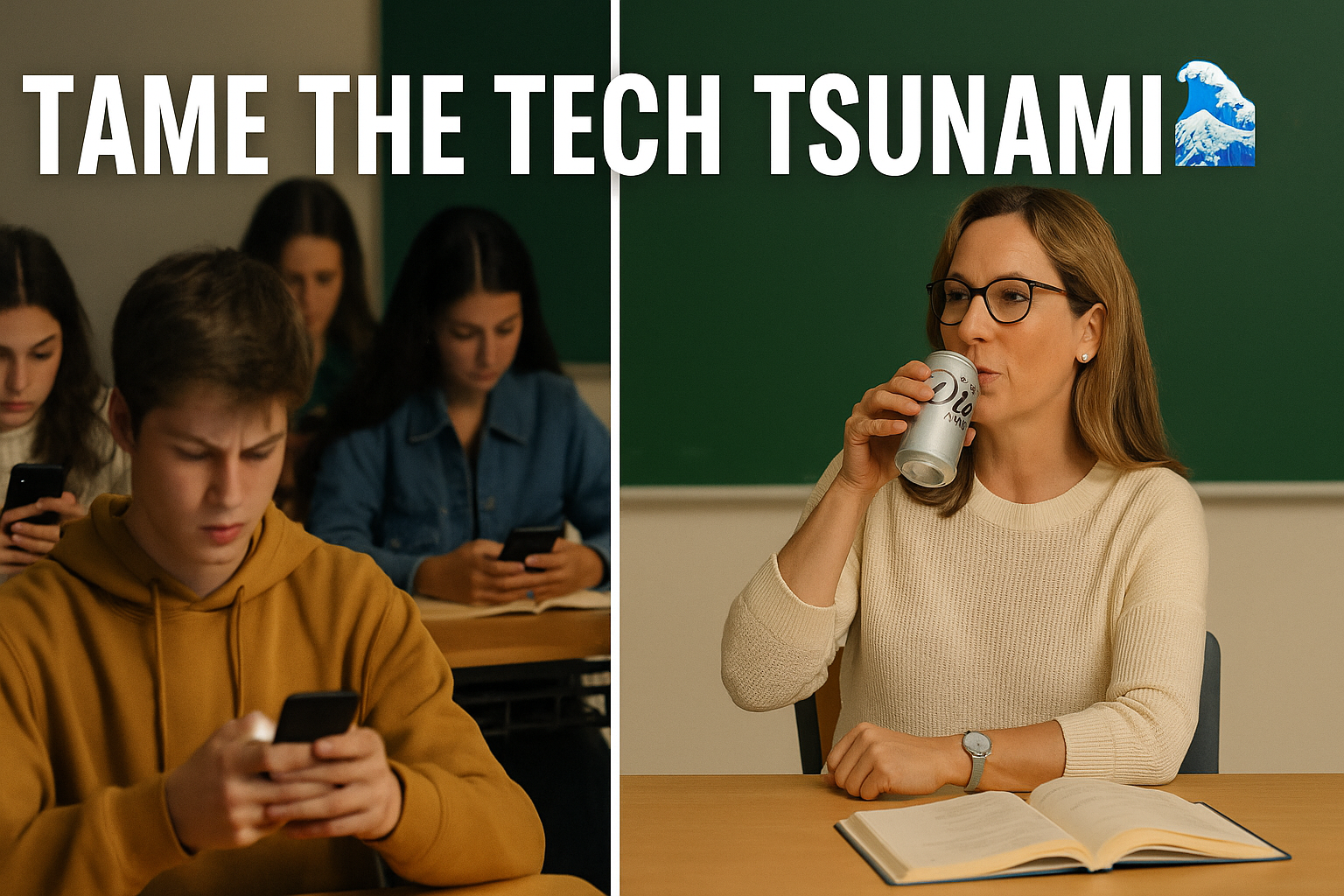
If teaching in 2025 feels like you’re trying to run a CI lesson inside a TikTok feed, you’re not alone. You could have the world’s most engaging story about a llama who falls in love with a churro, but half your class is still secretly watching soccer highlights or checking if “their mom texted.” Phones are the final boss of engagement. But here’s the plot twist — they don’t have to be the enemy.
The problem isn’t the phones. It’s how we use them. Phones can either be a black hole that sucks your lesson into oblivion or the most powerful CI tool you’ve got — if you learn how to weaponize them for good. Let’s talk about how to make the latter happen, without losing your sanity (or your voice shouting, “¡GUARDEN LOS TELÉFONOS!” for the 47th time this period).
Make the Phone Your Co-Teacher
Imagine your phone as your slightly chaotic assistant — unreliable but capable of brilliance when managed correctly. Students already treat their devices like emotional support animals. Instead of wrestling it away, recruit it for Team Comprehensible Input.
Try letting students use AirDrop to share memes or GIFs that represent target vocabulary. You’ll see engagement skyrocket faster than a student’s screen time on Friday nights. Or let them use voice recording apps to re-listen to your stories — like a personalized CI podcast featuring their favorite unhinged classmate’s line delivery.
Then, there’s the “Phone Pass” — a sacred, once-per-day privilege that lets one student become “Señor Google” and look up a single translation. The rest of the class watches them like a referee watching a soccer VAR replay. It’s ridiculous, but the power dynamic works. Students suddenly don’t want to be the one with the phone because everyone’s watching them. You win by losing.
Turn Doomscrolling into Input Scrolling
Your students are already scrolling — might as well make it linguistic. Create a class TikTok or Instagram where students script short, simple TL scenes. They can film, caption, and share them. Bonus: they beg to “retake” until it’s perfect, which means repetition without you even asking.
Next, try a “song lyric of the week.” Students pick one line from their favorite song that includes your target structure and explain (in TL or English) what it means. Suddenly, you’ve bridged their Spotify universe with your classroom universe.
And for extra hilarity — assign “Grammar Police Patrol.” Students screenshot hilariously bad online translations (you’ll get gold) and explain in the TL why it’s wrong. They become mini language vigilantes. It’s funny, authentic, and deeply comprehensible.
Establish the “Phone Thunderdome” (Controlled Chaos Zone)
Phones don’t have to be all or nothing. Create a “Phone Zone” — a clearly labeled desk area or even a time period where phones are allowed but only for CI-approved use. QR codes become your new best friend: reading texts, quick comprehension checks, video snippets, polls — all from one tiny square.
And here’s a teacher hack you’ll actually enjoy: the “Two-Minute Tech Timeout.” Pause class and tell students they have two minutes to find one funny or interesting TL post, meme, or image to share. Phones stay out because they’re actively being used in.
It’s counterintuitive, but giving them structured “tech moments” actually reduces their impulse to sneak it. Phones go from forbidden fruit to scheduled snack.
Reward Real-World Language Wins
Phones can connect your classroom to the real world faster than you can say “Señor, look what I found on Duolingo.” Challenge students to find real-world TL — a menu, a sign, a YouTube comment. Have them share it on Fridays like show-and-tell meets linguistic scavenger hunt.
Then there’s the magic of Google Lens. Flip it — have students scan real TL text and analyze what Google got wrong. It’s authentic input with built-in error analysis.
Finally, gamify it with “IRL Points.” Students earn points for every authentic TL interaction they discover. The student who finds “¡Prohibido usar el móvil!” on a real sign gets eternal irony points.
Teach Digital Discipline, Not Digital Denial
Phones aren’t going anywhere, and pretending we can ban them out of existence is like trying to ban oxygen. Instead, model responsible use and weave it into your CI world.
Introduce your class to your new “Phone Persona” — a fictional student who constantly checks messages mid-story. Have students address that “student” in the TL. (“¡No mires el teléfono, Juanito!”). It’s classroom theater that calls out behavior without actual confrontation.
Then try the “One Text, One Translation” policy. If a student absolutely must check a message, they owe you a TL sentence aloud afterward. Instant accountability with a language twist.
And finally, build your “Meme of Shame” wall — a collection of funny reminders of when phones went rogue. (“Remember when Jovani’s phone started playing Bad Bunny mid-quiz?”). It becomes a hilarious shrine to past chaos — and a subtle deterrent for future offenders.
Your Secret CI Weapon: The CI Survival Kit
Phones are just one modern classroom battle — and if you’re trying to juggle engagement, chaos, and proficiency all at once, you need backup. That’s where the CI Survival Kit comes in. Each month, you’ll get ready-to-use CI resources, stories, and now Ask-a-Story Slides in French, German, and Spanish — all designed to save your voice, your time, and maybe your sanity.
Ready to Find Out How Proficient You Really Are?
Want to see where your CI practice stands — and what your next growth move should be? Take the free CI Proficiency Quiz. It’s quick, enlightening, and might just give you the “aha” moment you need to bring calm to your chaos.
Conclusion: You, Phones, and the Future of CI
Phones aren’t leaving your classroom — but neither is your brilliance. You can either fight them like it’s 2010, or use them like it’s 2025: creatively, comprehensibly, and with just enough sarcasm to survive the day. When used strategically, phones can make your students feel connected, seen, and — dare I say — invested.
Let’s stop pretending we can control every scroll and start directing it toward something meaningful. Use the hacks, embrace the tech, and make your CI classroom the place where language learning and real life finally get along.
Key Takeaways
- Don’t fight phones — train them to work for you.
- Turn real-world scrolling into authentic TL input.
- Schedule “Phone Zones” for structured use instead of banning.
- Reward real TL finds — make phones your global input device.
- Model digital balance with humor, not fear.