Stop Grading Mountains: The 2-Minute Micro-Assessment Data Revolution
Drowning in grading? Discover how Micro-Assessments provide instant classroom data without the Sunday night stress. Practical teacher-to-teacher strategies for real-time feedback and improved student mastery.

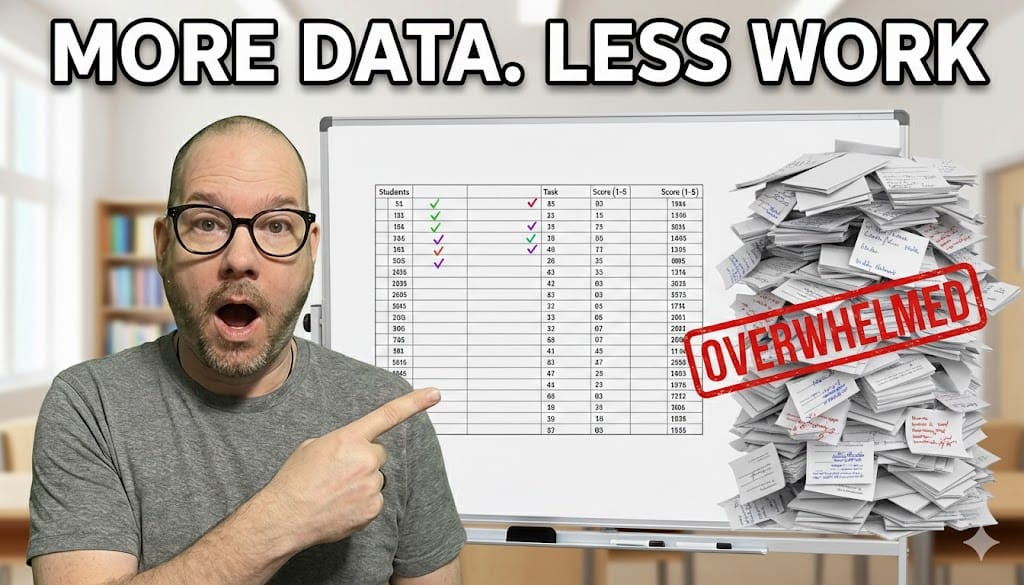
It is Sunday night at 8:45 PM. You are sitting on your living room floor, surrounded by three distinct "tower blocks" of paper. Block A is the homework that half the class didn't do. Block B is the unit test that took you four hours to write and will take eight hours to grade. Block C is a stack of vague "Exit Tickets" that mostly say "I'm confused" or "I liked the video." You feel like a data analyst drowning in a sea of irrelevant numbers, yet you still aren't entirely sure if Tyler actually understands how to calculate the volume of a cylinder.
This is the Grading Paradox: the more we assess, the more we work, yet the less we actually know about what is happening in our students' brains in real-time. We are assessment-rich and insight-poor. But there is a better way. Micro-assessments—tiny, targeted, high-frequency checks—are the secret to regaining your sanity while simultaneously becoming the most informed teacher in your building.
The Power of the High-Resolution Snapshot
The traditional assessment model is like taking a single photograph of a moving train at the end of its journey. You see where it finished, but you missed all the times it nearly derailed in the mountains. Micro-assessments are like a dashboard GPS. They give you constant, small pings of data that allow you to adjust the steering before the train hits the canyon.
When we talk about micro-assessments, we aren't talking about "mini-quizzes." We are talking about 60-second interventions. These are designed to answer one specific question: Did they get the thing I just said? This isn't theoretical. If you teach a 50-minute lesson and wait until the end to check for understanding, you have potentially wasted 49 minutes of instruction on a student who got lost at the "Hello."
Classroom Scenario: The "I Missed Monday" Loop (Absenteeism)
Student (Sarah): Walks in on Tuesday after missing a crucial intro lesson. "I wasn't here yesterday. What do I do?" Teacher: Instead of a 10-minute recap while the class waits: "Sarah, grab this 'Bridge Card.' It has the three main steps from yesterday. Try step one on this practice problem. I’ll be back in 60 seconds to check just that one step." The Result: By using a micro-assessment (the Bridge Card), you’ve gathered data on her starting point without derailing the class. If she nails step one, she’s ready for today. If she doesn't, you know exactly where the gap is.
Common Teacher Mistake: The "Participation Trap." We assume that because three kids in the front row are nodding and answering questions, the entire class "gets it." Nodding is not data. Participation is a measure of extroversion, not mastery. The Fix: The "No-Opt-Out" Micro-Check. Instead of asking "Does everyone understand?" (to which the answer is always a lying "Yes"), say: "On your whiteboard, write the one word that describes the protagonist's motivation. 3, 2, 1... show me." Now you have 30 data points in three seconds.
Tool: The "Three-Color" Decision Rule Keep a stack of Red, Yellow, and Green index cards. At the midpoint of a lecture, ask a "Check" question. Students hold up a card.
- 80% Green: Keep moving.
- 50% Yellow: Peer-teach for 2 minutes, then re-check.
- 30% Red: Stop the lesson. Pivot. Re-teach the concept using a different analogy.
Engineering the "Low-Stakes, High-Output" Environment
Teenagers are expert gamblers. They weigh the "cost" of effort against the "payout" of the grade. If an assessment looks big, scary, and long, they shut down to protect their egos—this is the root of the procrastination we see every day. Micro-assessments lower the cost of entry. It is very hard to procrastinate on a task that takes 45 seconds.
By breaking down the "Big Scary Grade" into a series of "Micro-Wins," you change the psychology of the classroom. You move from a culture of "Did I pass?" to a culture of "Did I master this specific skill?" This is particularly effective for students who struggle with executive function or those who have "tested out" of caring about school.
Classroom Scenario: The 15-Minute Wall (Procrastination)
Student (Leo): Staring at a blank essay prompt for twenty minutes. Teacher: "Leo, I don't want the essay yet. I just want a micro-check on your 'Thesis Verb.' Write one sentence with a strong verb that explains your argument. I'm coming back in three minutes to 'buy' that sentence from you." The Result: You’ve turned a massive, vague task into a micro-assessment of a single skill (verb choice). Leo now has a manageable goal, and you have data on his ability to formulate an argument.
Common Teacher Mistake: Over-complicating the "Exit Ticket." If your exit ticket has five questions and requires a paragraph, you won't grade it until Friday, and the data will be useless by then. The Fix: The "Single-Pivot" Question. Ask one question that requires the student to apply the most difficult concept of the day. For example: "If the temperature doubled in this equation, would the pressure go up or down? Why?"
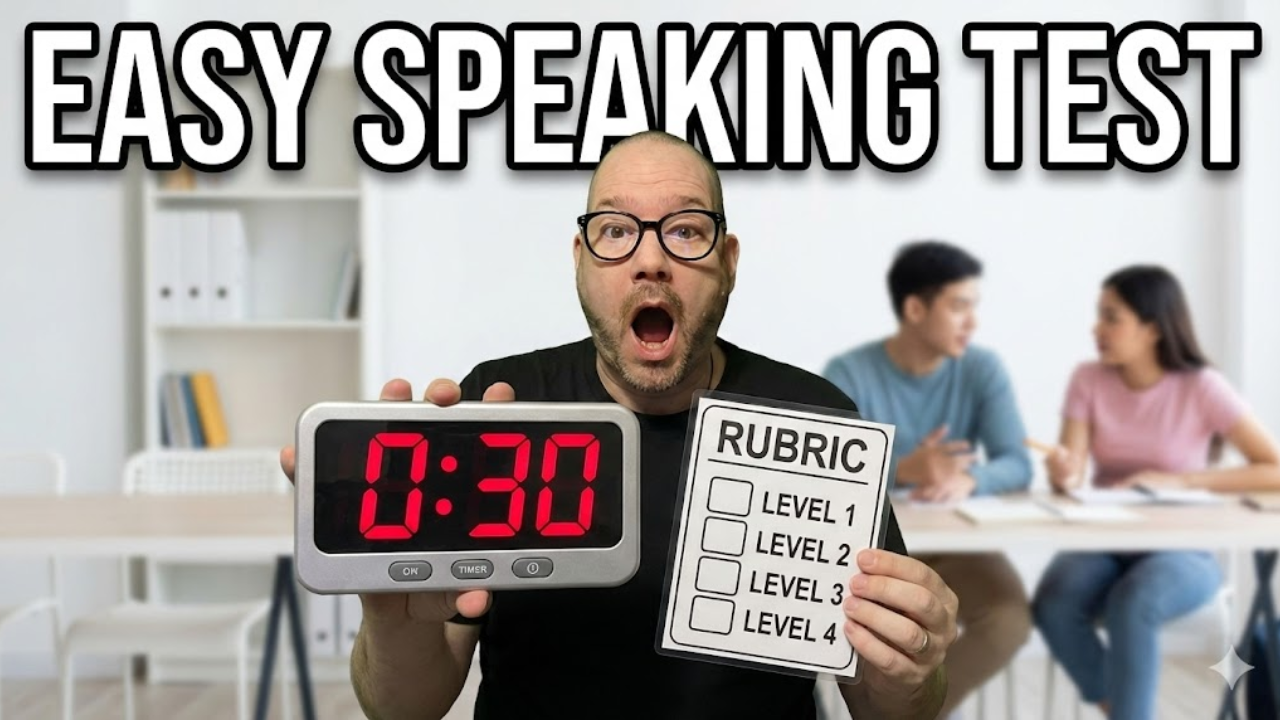
Tool: The "1-to-4" Rubric Script Instead of a complex grading grid, use a permanent "Micro-Rubric" on your whiteboard:
- I’m lost (Needs a re-teach)
- I need a map (Needs a scaffold)
- I’m walking (Doing well, needs more practice)
- I’m running (Ready for a challenge) Have students write their number at the top of every micro-check. It forces self-reflection and tells you who to sit with first.
Data Without the Paper Trail: Verbal and Visual Cues
We often think data has to be a number in a spreadsheet. But the most valuable data is the kind that tells you why a student is struggling. You can’t get that from a Scantron. You get it from "Verbal Micro-Assessments." This involves structured, rapid-fire questioning techniques that don't feel like an interrogation but act like a diagnostic scan.
This method also prevents the "Grade-Grubbing" culture. When students receive feedback five times an hour in small, non-threatening doses, the final grade becomes a formality rather than a surprise they have to negotiate. They already know where they stand because you’ve checked their "pulse" twenty times during the unit.
Classroom Scenario: The "Why a B?" Pivot (Grade-Grubbing)
Student (Maya): "Why did I get a B on this lab report? I did everything!" Teacher: "Let's look at our micro-checks from last week. Remember on Wednesday when we checked your 'Variable Control' and we saw that you missed the secondary factor? And on Thursday, our 'Hypothesis Check' showed you were still struggling with the 'If-Then' structure? This grade is just the sum of those tiny moments we worked on." The Result: The conversation shifts from "You are being mean" to "Here is the data trail of your learning." Maya can't argue with a week's worth of micro-data.
Common Teacher Mistake: The "Vague Praise" Trap. Saying "Good job, everyone" provides zero data. It actually masks confusion because students who are lost will hide behind the general positive vibe. The Fix: "Targeted Validation." Instead of "Good job," say: "I see 18 people used the term 'osmosis' correctly in their 30-second summary. That’s a 20% increase from ten minutes ago."
Tool: The "Clipboard Heat Map" Create a seating chart on a single sheet of paper. During the "Work Phase" of your lesson, circulate with a highlighter.
- Green Dot: Mastered the micro-skill.
- Yellow Dot: Minor error, needs one hint.
- Red Dot: Fundamental misunderstanding. At a glance, you can see if a "Red Zone" is forming in the back left corner of the room.
Scaling Up: Tech-Enabled Micro-Assessments
In the modern classroom, technology shouldn't just be for "showing videos." It should be a data-collection machine. However, the mistake most teachers make is using tech for "Big Tests." Tech is best utilized for the "Nano-Check." Tools like PollEverywhere, Plickers (no student devices needed!), or even a simple shared Google Doc can provide a "God-view" of the classroom's cognitive state.
Imagine being able to see every student’s draft sentence as they type it. You can spot the student who is about to spend 20 minutes writing a paragraph based on a false premise. You can "intervene in the air" before their pen even hits the paper. This is the ultimate stress-reducer because it eliminates the "What were they thinking?" moment during Sunday night grading.
Classroom Scenario: The Silent Shut-Down (Procrastination/Anxiety)
Student (Ethan): Sitting perfectly still, looking at his screen, but has typed nothing for 10 minutes. Teacher: Using a "Live View" tool: "Ethan, I noticed your screen is a bit lonely. I’m pushing a 'Micro-Prompt' to your doc right now. It’s just three words to start your sentence. Can you finish it for me?" The Result: You caught the procrastination before it became a "zero." You didn't have to call him out in front of the class because the micro-assessment tool allowed for a private, data-driven intervention.
Common Teacher Mistake: Using tech for "Fluff." If you’re using a gamified quiz just for a "break," you’re missing a data goldmine. The Fix: "The 3-Question Sprint." Use a digital tool for exactly three questions. Question 1: Recall. Question 2: Application. Question 3: "The Trap" (a common misconception). The data from Question 3 tells you exactly what to start with tomorrow.
Tool: The "Auto-Reply" Feedback Script When using digital forms for micro-checks, set the "Confirmation Message" to include the correct answer and a "Next Step" link.
- Script: "Thanks for submitting! If you chose Option B, you’ve correctly identified the metaphor. If you chose A, check out$$this 30-second clip$$to see why it’s actually a simile!" This provides immediate feedback without you saying a word.
Closing the Loop: The Metacognitive Micro-Check
The final, and perhaps most important, type of micro-assessment is the one the student does on themselves. If we want to reduce our stress, we have to stop being the only ones responsible for the data. We need to train students to be "Self-Data Scientists." This means ending every lesson not with a "Bye, see you tomorrow," but with a micro-moment of reflection.
This isn't just "How do you feel?" It’s "What do you know?" When students are forced to summarize their learning in a micro-format (a tweet, a headline, a single sketch), it sticks. It also gives you the most honest data you will ever get.
Classroom Scenario: The "I Don't Get It" Shrug (The Absenteeism/Apathy Gap)
Student (Jordan): "I don't get any of this. It's too much." Teacher: "That’s too big of a problem to fix. Give me a 'Micro-Gripe.' What is the one word I said today that made your brain turn off?" Jordan: "Coefficient." Teacher: "Perfect. Now we have a starting point. Let’s tackle just that word." The Result: By forcing a micro-assessment of the "confusion," you’ve made a mountain into a molehill.
Common Teacher Mistake: Skipping the "Wrap-Up" because the bell is about to ring. The last two minutes are the most important for data. The Fix: The "Bell-Ringer Reverse." The last micro-check of the day is a prediction for the first question of tomorrow.
Tool: The "Minute Paper" Checklist Have a permanent bin of 1/4-sized sheets of paper. In the last 60 seconds, students must answer:
- What was the "Big Idea" today?
- What is one question I still have?
- On a scale of 1-10, how much of my own brain did I actually use?
How to Start Tomorrow
Implementing a micro-assessment system doesn't require a weekend of planning. In fact, if it takes a weekend, you’re doing it wrong. Here is your "Low-Stress Launch" plan for the coming week.
The First-Week Implementation Plan
- Monday (The Baseline): Don't change your lesson. Just add a "Mid-Point Stop." Twenty minutes into class, stop everyone. Ask one question. Have them write the answer on a scrap of paper and hold it up. Don't record it. Just look. Use that visual data to decide if you need to repeat the last five minutes.
- Tuesday (The Digital Pulse): Use a 3-question digital form (Google Forms/Microsoft Forms) as your Exit Ticket. Set it to "Show Results to Respondents" so they get immediate feedback. Spend your evening not grading, but just looking at the "Summary of Responses" pie charts for five minutes.
- Wednesday (The Clipboard Walk): Print a seating chart. During independent work, your only goal is to put one mark (Check, Plus, or Minus) next to every name based on a 30-second "look-over" of their work.
- Thursday (The Peer-Check): Have students swap papers for a "60-Second Edit." They aren't grading; they are looking for one specific thing (e.g., "Find the period at the end of every sentence"). This gathers "Community Data."
- Friday (The Reflective Finish): Use the "Minute Paper" (The Big Idea, The Big Question, The Effort Scale). Use these to plan your "Monday Re-Teach" group while you’re waiting for the copier.
Student-Facing Policy (For Your Syllabus)
The "No-Surprise" Guarantee: Our Micro-Check Policy In this classroom, you will never be "surprised" by a grade. We believe that learning is a series of small steps, not one giant leap. To help you succeed, we use a system called Micro-Assessments.Frequency: Expect 2-3 "Micro-Checks" per class. These are 60-second tasks that help me see if I’m teaching clearly and if you’re learning accurately.Stakes: Most Micro-Checks are "Low-Stakes" (Check/No-Check). They are meant for practice. If you get it wrong, we fix it immediately. This counts toward your "Daily Engagement" score, not your "Mastery" score.The "Fix-It" Clause: If you struggle with a Micro-Check, it is your responsibility to attend a "30-Second Huddle" with me during work time. We don't let small confusions turn into big failures.Transparency: I will share "Class Data Maps" (anonymously) so you can see how we are doing as a team. You are never alone in your learning curve.
Teacher Script for Introducing the System (90 Seconds)
"Alright everyone, eyes up here for a second. We’re going to change how we handle 'work' in this room. Usually, teachers give you a big test at the end of a month to see if you learned. That’s like a doctor waiting until you're in the hospital to ask if you feel okay. It’s too late.
Starting today, we’re doing 'Micro-Checks.' These are tiny, 60-second bursts of data. I’m going to be like a human GPS. Every few minutes, I’m going to ping you for a quick answer—on a whiteboard, a sticky note, or a digital form. If the data says we’re on the right track, we keep moving. If the data says we’re lost in the woods, we stop and find our way together.
This means two things for you: First, no more 'Big Scary Surprises' on Friday. You'll know exactly what you know every single day. Second, your grade will reflect your actual growth, not just how well you can cram for a test. I’m not here to 'catch' you getting it wrong; I’m here to 'catch' the mistake while it’s still small enough to fix. Let’s try our first one right now: In ten words or less, what is the goal of a Micro-Check? Write it on your desk in dry-erase marker. 3, 2, 1... go."
Troubleshooting the System
- "What if they just copy the person next to them?"
- Micro-assessments aren't about "security"; they're about "diagnostic." Tell them: "If you copy, you're lying to the GPS. I'll drive us off a cliff because I think you know the way." Use "Eyes-to-Ceiling" pauses before they write to ensure independent thought.
- "I don't have time to do this and cover the curriculum."
- You don't have time not to do this. Covering a curriculum that students aren't learning is just "talking to a room." Micro-assessments save time by preventing the three-day "Emergency Re-Teach" that happens when everyone fails the unit test.
- "How do I put this in the gradebook?"
- Don't put every micro-check in the gradebook. Create one weekly category called "Daily Data Pulse" worth 10-15% of the grade. If they engaged with the micro-checks, they get the points. Use the data to inform the actual grades, not to be the grades.
- "My students are too shy to show their answers."
- Use anonymous tech tools (like Mentimeter) or "Private Whiteboards" (they hold the board against their chest and only show you as you walk by). Normalize the "beautiful struggle" of learning.
- "What about the 'I'm done' kids who breeze through micro-checks?"
- Keep a "Micro-Challenge" on the board. "If you nail the check in under 10 seconds, your next task is to find a counter-argument to the answer you just gave."
- "I have 180 students. I can't look at 180 sticky notes."
- You don't have to look at them all individually. Spread them on a table and look for "Patterns of Color" or "Length of Response." In 60 seconds, you can sort 180 notes into "Got it," "Almost," and "Help!" piles.
Five Key Takeaways for the Micro-Assessment Master
- Speed Over Scope: One question answered by 100% of the class is better than ten questions answered by 10%.
- Data is Perishable: If you don't use the information to change your teaching within 24 hours, it’s just clutter.
- Low Stakes, High Safety: The more "micro" the check, the less "macro" the anxiety.
- Feedback is the Fuel: A micro-assessment without a follow-up comment is just a chore.
- Reclaim Your Life: Use these tools to ensure that when you walk out of the school building, your work stays in the building. Mastery is for the classroom; rest is for the teacher.